TECHNICAL DATASHEET

TGG In-Line Optical Isolator (850nm, 980nm, 1030nm, 1064nm, 1080nm)

Standard In-Line Optical Isolator based on Terbium Gallium Garnet (TGG) crystal technology providing polarization-insensitive or polarization-maintaining isolation across 850nm, 980nm, 1030nm, 1064nm, and 1080nm with high isolation (up to 45 dB) and low insertion loss (<=1.0 dB).

Technical Specifications

Parameter
Specification
Unit
Center Wavelength
850, 980, 1030, 1064, 1080
nm
Operating Bandwidth
±5
nm
Peak Isolation
38 (Single Stage) / 52 (Dual Stage)
dB
Min. Isolation @ 23°C
30 (Single Stage) / 45 (Dual Stage)
dB
Max. Insertion Loss @ 23°C
1.0 (Single Stage) / 1.6 (Dual Stage)
dB
Min. Extinction Ratio (PM Type)
20 (Both axes) / 22 (Fast axis blocked)
dB
Min. Return Loss
50
dB
Max. Optical Power (CW)
300 / 500
mW
Fiber Type
HI1060 (SM) or PM Panda Fiber (PM)
-
Operating Temperature
+10 to +50
°C
Package Dimensions
68 x 32 x 28 mm
mm
Technical Datasheet Note
Available in both Polarization-Insensitive (PI) and Polarization-Maintaining (PM) configurations. Connectors add 0.3 dB insertion loss.
Configuration and ordering notes

Configuration parameters include single-mode or PM fiber, operating wavelength, and whether Single Stage (30 dB isolation) or Dual Stage (45 dB isolation) is required.

Selection Guidance: Review thermal dissipation, damage thresholds and cooling options in our High Power Optical Isolator Guide ↗ or compare operating bands in the 1064nm and 1550nm Optical Isolator Selection.

Key Applications

Laser diode seed source protection; Fiber laser oscillator isolation; Optical sensor transmitters; Laboratory test benches.

Package Drawing
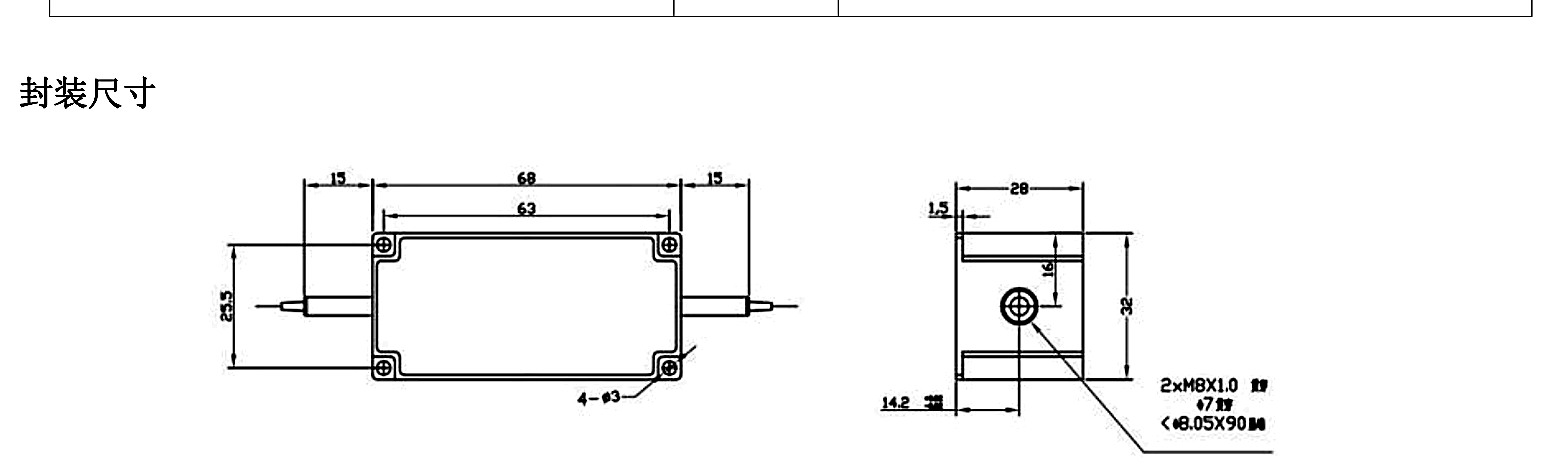
114 TGG In-Line Optical Isolator (850nm, 980nm, 1030nm, 1064nm, 1080nm), Center Wavelength: 850, 980, 1030, 1064, 1080 – KernsOptic
Package reference for TGG In-Line Optical Isolator (850nm, 980nm, 1030nm, 1064nm, 1080nm). Confirm the final configuration during engineering review.

Need an exact configuration?

A quotation review can begin with the application, quantity and available component information. Wavelength, optical power, fiber and termination details can be clarified with engineering.