Mini Size PM PBS/PBC (Beam Splitter / Combiner)
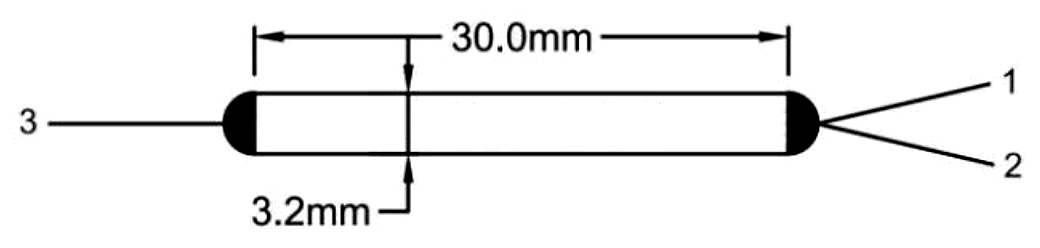
Miniature Polarization Beam Splitter / Combiner (PBS/PBC) for combining orthogonal polarization states into a single fiber or splitting orthogonal states into two output PM fibers. Features ultra-compact dia. 3.2 x 30 mm package, low insertion loss (typ. 0.5 dB), high extinction ratio (≥20 dB), and high directivity (≥50 dB).
Technical Specifications
With connectors, IL increases by 0.3 dB, RL decreases by 5 dB and ER decreases by 2 dB. Custom configurations, fiber types for Port 3, and connector terminations are confirmed during quotation.
Configuration and ordering notes
PBS and PBC operation use different port functions. Port 3 fiber type and polarization behavior are reviewed against the intended optical layout.
Key Applications
EDFA & Raman amplifier pump combining; Coherent optical communication systems; Fiber sensor polarization multiplexing; Photonics R&D modules.
Package Drawing
Need an exact configuration?
A quotation review can begin with the application, quantity and available component information. Wavelength, optical power, fiber and termination details can be clarified with engineering.