Mini Size PM Tap + Optical Isolator Hybrid
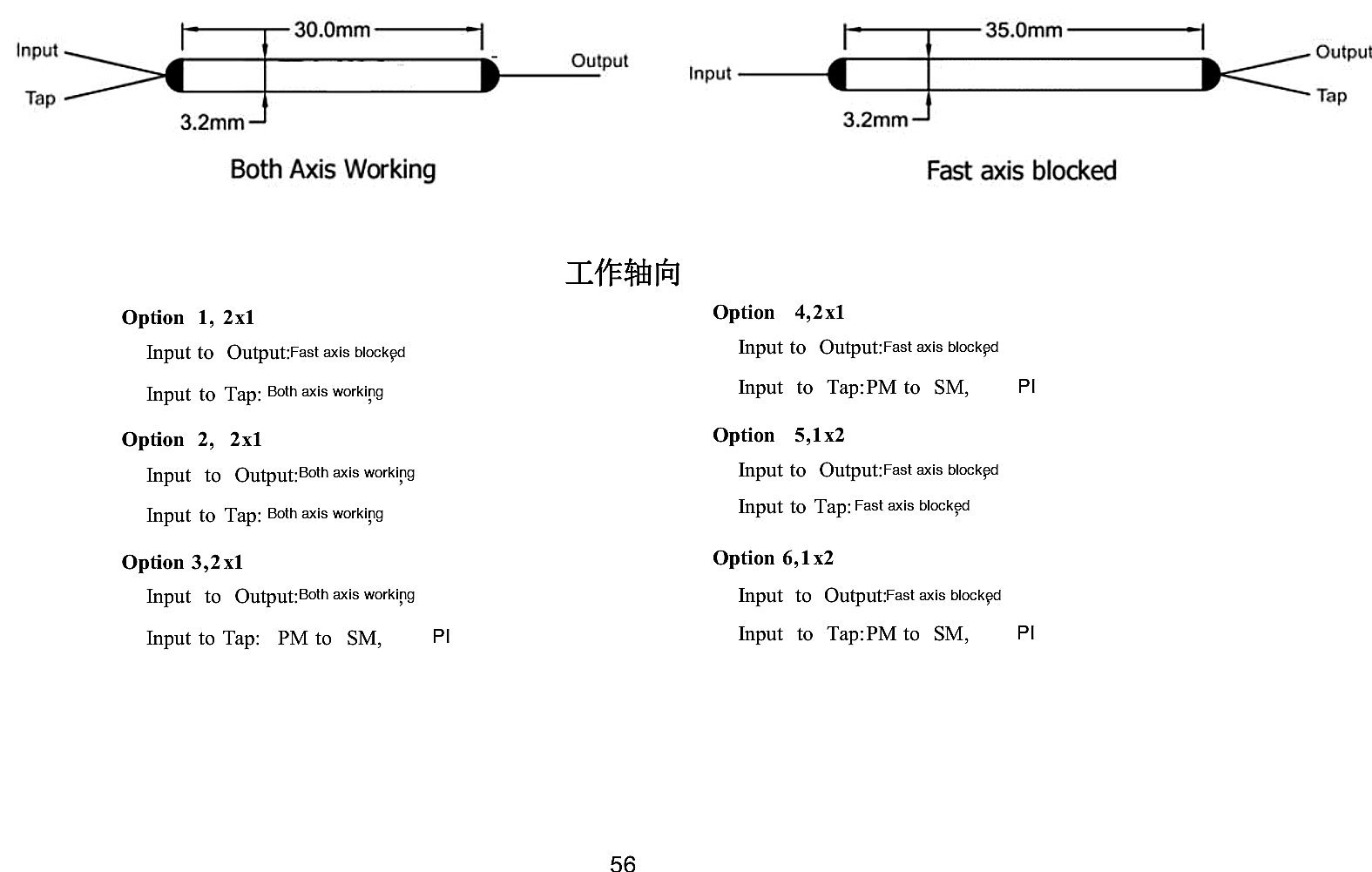
Miniature multifunction hybrid integrating a polarization-maintaining optical tap coupler and an optical isolator in a single compact package (dia. 3.2 x 30/35 mm). Drastically reduces component count, fusion splice losses, and board footprint in optical transceivers, EDFA modules, and fiber sensing links.
Technical Specifications
Single / Dual values are shown in the same order. With connectors, IL increases by 0.3 dB, RL decreases by 5 dB and ER decreases by 2 dB. Custom tap ratios (1%, 2%, 5%, 10%) and pigtail lengths are confirmed during quotation.
Configuration and ordering notes
Single-stage and dual-stage options combine optical isolation with a monitoring tap. Isolation, excess loss and tap conditions are listed by configuration.
Key Applications
Optical power monitoring with reverse laser protection; Compact EDFA & SOA modules; Optical transceivers & line cards; Fiber sensing & interferometers.
Package Drawing
Need an exact configuration?
A quotation review can begin with the application, quantity and available component information. Wavelength, optical power, fiber and termination details can be clarified with engineering.